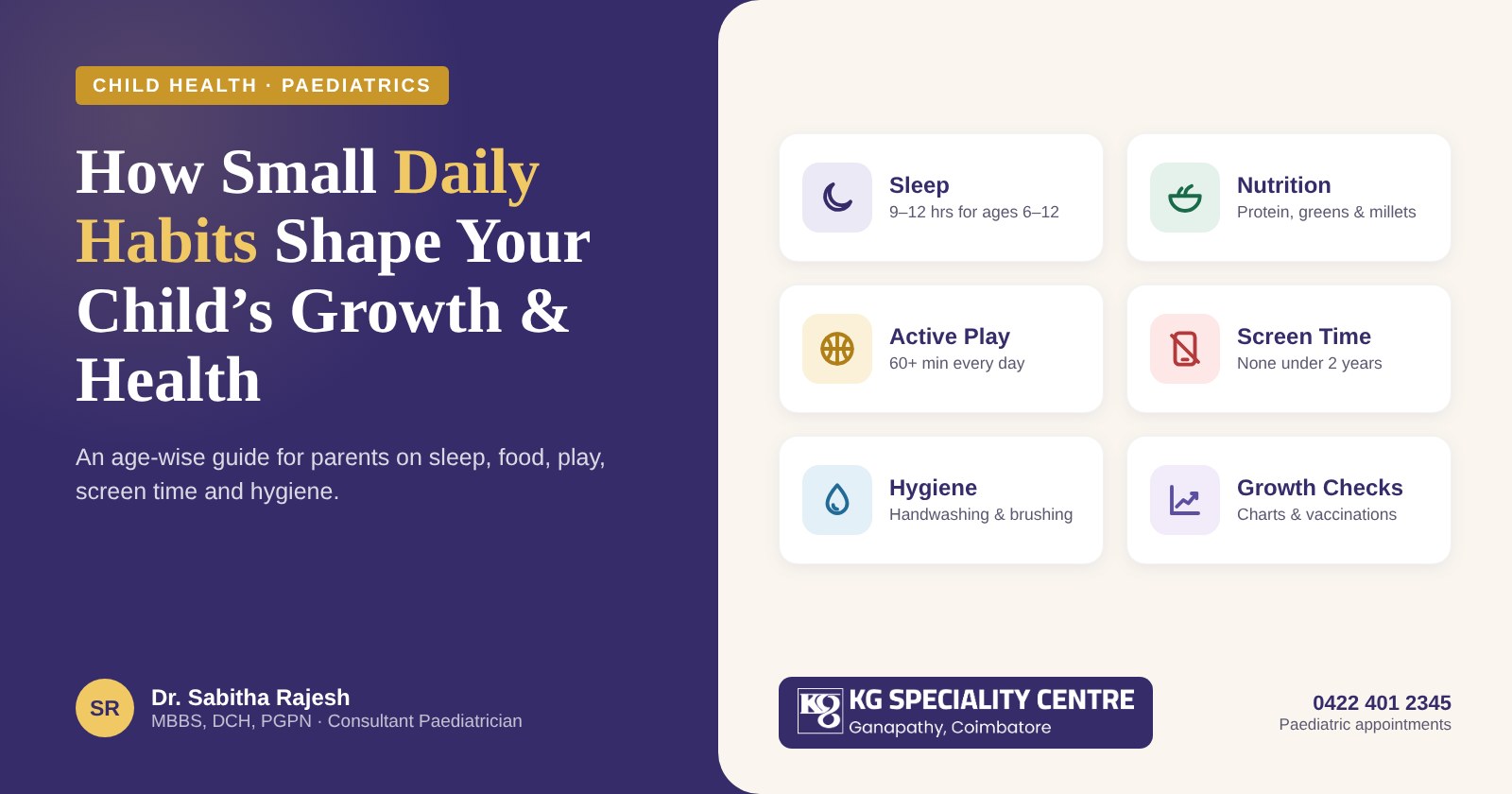
Small daily habits shape a child’s growth because they repeat every day and add up over years. The habits that matter most are: enough sleep for their age (9–12 hours for school-age children), three balanced meals with protein, fruits and vegetables, at least 60 minutes of active play daily, limited screen time (none under age 2), good hygiene, and regular growth check-ups with a paediatrician.
Why do small daily habits matter so much for a child’s growth?
A child’s body grows fastest in the first few years of life and again during puberty. Growth in these windows depends on a steady supply of the right building blocks: nutrients, deep sleep, movement and protection from repeated illness. A single missed meal or late night does little harm. The same pattern repeated over months can show up as poor weight gain, frequent infections, low energy or difficulty concentrating at school.
Parents in Ganapathy and across Coimbatore often ask us for a tonic or supplement to improve height or appetite. In most healthy children, routine does more than any supplement. Supplements have a role only when a paediatrician has confirmed a specific deficiency.
Think of it this way: growth hormone is released mainly during deep sleep, bones need movement and calcium to strengthen, and the immune system needs protein and micronutrients. Daily habits supply all of these.
1. Sleep: how many hours does my child need?
Sleep is when the body releases most of its growth hormone, repairs tissues and consolidates learning. Children who sleep too little are more likely to have attention problems, irritability, frequent illness and unhealthy weight gain.
The American Academy of Sleep Medicine (endorsed by the American Academy of Pediatrics) recommends these totals per 24 hours, including naps:
- 4–12 months: 12–16 hours
- 1–2 years: 11–14 hours
- 3–5 years: 10–13 hours
- 6–12 years: 9–12 hours
- 13–18 years: 8–10 hours
Practical habits: keep the same bedtime and wake-up time on school days and weekends, switch off screens at least an hour before bed, keep the bedroom dark and cool, and avoid tea, coffee or cola in the evening. Loud regular snoring or pauses in breathing during sleep should be checked by a paediatrician.
2. Nutrition: what should a growing child eat every day?
Growth needs enough energy and enough protein, iron, calcium, zinc and vitamins. Iron deficiency anaemia remains common among Indian children and can affect energy, appetite and learning, so food quality matters as much as quantity.
The Indian Academy of Pediatrics (IAP) advises limiting junk foods, ultra-processed foods, sweetened and caffeinated drinks for children, and the ICMR–National Institute of Nutrition Dietary Guidelines for Indians (2024) recommend a varied diet built around whole grains, pulses, vegetables, fruits and milk. For infants, exclusive breastfeeding for the first 6 months, followed by home-made complementary foods with continued breastfeeding, is the foundation of healthy growth.
If your child is a picky eater, underweight, overweight or has food allergies, a paediatric nutrition consultation at KG Ganapathy can assess growth and build a meal plan that suits your family’s food habits.
3. Physical activity: how much play does a child need?
Running, jumping, cycling and climbing strengthen bones and muscles, improve appetite and sleep, and help maintain a healthy weight. The World Health Organization recommends:
- Ages 3–4: at least 180 minutes a day of varied physical activity, of which at least 60 minutes is moderate-to-vigorous.
- Ages 5–17: an average of at least 60 minutes a day of moderate-to-vigorous activity, with muscle- and bone-strengthening activities at least 3 days a week.
Practical habits: outdoor play in the evening, walking or cycling for short distances, weekend family activity, and limiting long sitting periods. Outdoor time in daylight also supports vitamin D and healthy eye development.
4. Screen time: how much is safe for children in India?
Screens are not harmful in themselves, but long hours displace sleep, play, reading and family conversation. Excess screen time is linked to poor sleep, delayed speech in young children, eye strain and weight gain. The Indian Academy of Pediatrics guidelines on screen time and digital wellness recommend:
- Under 2 years: no screen exposure.
- 2–5 years: no more than 1 hour a day, with good-quality content watched together with a parent.
- 5–10 years: less than 2 hours a day of recreational screen time.
- All ages: no screens during meals or in the hour before bedtime.
Children copy what they see, so parents’ own screen habits are one of the strongest influences. Screen-free meal times and a family “phone parking spot” at night are simple places to start.
“Children rarely need a perfect routine. They need a predictable one: the same bedtime, real meals, time outdoors and parents who model the habits they ask for.”
— Paediatrics Team, KG Speciality Centre, Ganapathy5. Hygiene, oral care & immunity
Frequent infections such as diarrhoea, worm infestation and respiratory illness take energy away from growth. Simple hygiene habits reduce how often children fall sick:
- Handwashing with soap and water for at least 20 seconds before meals and after using the toilet or playing outside.
- Brushing twice a day with fluoride toothpaste (a rice-grain-sized smear under 3 years, a pea-sized amount from 3 years), and limiting sticky sweets between meals.
- Safe drinking water and clean, freshly cooked food.
- Deworming as advised by your paediatrician.
6. Growth monitoring & vaccinations: the habit parents forget
Height and weight plotted on a growth chart (WHO standards up to 5 years and IAP charts for older children) show whether a child is growing along their own curve. One measurement alone says little. The trend over time shows whether something needs attention.
Make well-child visits and the IAP immunisation schedule part of your family calendar. The Paediatrics department at KG Speciality Centre, Ganapathy offers well-baby clinics, growth and development monitoring, vaccinations and nutrition counselling under one roof, with an on-site NICU and 24/7 paediatric emergency care.
Age-wise daily habit chart
| Age | Sleep (per 24 h) | Physical activity | Recreational screen time |
|---|---|---|---|
| 1–2 years | 11–14 hours | 180+ min of varied activity | None under 2 years |
| 3–5 years | 10–13 hours | 180+ min, incl. 60 min energetic | Max 1 hour, supervised |
| 6–10 years | 9–12 hours | 60+ min moderate-to-vigorous | Less than 2 hours |
| 11–12 years | 9–12 hours | 60+ min moderate-to-vigorous | Balanced, agreed family limits |
| 13–18 years | 8–10 hours | 60+ min moderate-to-vigorous | Balanced, agreed family limits |
When should you see a paediatrician about growth?
Book a paediatric consultation if you notice:
- No gain in weight or height over several months, or dropping across percentile lines on the growth chart
- Delayed milestones in speech, movement or social skills
- Constant tiredness, pale skin or very poor appetite
- Frequent infections, diarrhoea or cough that keep coming back
- Loud snoring, pauses in breathing at night or daytime sleepiness
- Rapid weight gain, or very early or very late signs of puberty
- Strong dependence on screens, withdrawal or sudden behaviour changes
For high fever with lethargy, breathing difficulty, fits (seizures) or dehydration, go to an emergency department immediately. KG Speciality Centre’s 24/7 emergency care on Sathy Road is staffed round the clock.
Key takeaways for parents
- Growth depends on daily routine more than on supplements or tonics.
- Protect sleep: a fixed bedtime and no screens in the hour before bed.
- Serve protein, fruits, vegetables and millets daily; swap sweet drinks for water.
- Aim for at least 60 minutes of active play a day for school-age children.
- Follow IAP screen limits: none under 2, max 1 hour for ages 2–5.
- Track growth on a chart and keep vaccinations on schedule.
Frequently asked questions
Which daily habits affect a child’s growth the most?
Five habits matter most: enough sleep for their age, regular balanced meals with protein, fruits and vegetables, at least one hour of active play a day for school-age children, limited recreational screen time, and good hygiene. Routine growth check-ups and timely vaccinations complete the picture.
How many hours should my child sleep?
Infants 4–12 months need 12–16 hours including naps, 1–2 years 11–14 hours, 3–5 years 10–13 hours, 6–12 years 9–12 hours, and teenagers 8–10 hours in every 24 hours (American Academy of Sleep Medicine).
How much screen time is safe for children in India?
The Indian Academy of Pediatrics advises no screens under 2 years, a maximum of one hour a day of supervised content for ages 2–5, and less than two hours of recreational screen time a day for ages 5–10.
How much physical activity does my child need every day?
WHO recommends at least 60 minutes a day of moderate-to-vigorous activity for children aged 5–17, and at least 180 minutes of varied activity (including 60 minutes of energetic play) for children aged 3–4.
When should I take my child to a paediatrician about growth?
If your child is not gaining weight or height as expected, is falling across percentile lines on the growth chart, has delayed milestones, constant tiredness, poor appetite, frequent infections, loud snoring or disturbed sleep. Regular well-child visits help catch these early.
Can small habits really change a child’s health?
Yes. Sleep, food, movement and routine repeat every day, so their effects add up over years. Consistent habits support growth hormone release, bone and muscle development, immunity, concentration and healthy weight, and habits formed in childhood often continue into adulthood.
Watch Dr. Sabitha’s short video on this topic on our Instagram page, or meet our paediatricians in Ganapathy →
References
- Paruthi S, et al. Recommended Amount of Sleep for Pediatric Populations: A Consensus Statement of the American Academy of Sleep Medicine. J Clin Sleep Med. 2016;12(6):785–786. jcsm.aasm.org
- World Health Organization. WHO Guidelines on Physical Activity and Sedentary Behaviour. 2020. who.int
- World Health Organization. Guidelines on Physical Activity, Sedentary Behaviour and Sleep for Children under 5 Years of Age. 2019. who.int
- Indian Academy of Pediatrics. Guidelines on Screen Time and Digital Wellness in Infants, Children and Adolescents. Indian Pediatrics. 2022;59:235–244. indianpediatrics.net
- Indian Academy of Pediatrics. Guidelines on Fast and Junk Foods, Sugar Sweetened Beverages, Fruit Juices, and Energy Drinks. Indian Pediatrics. 2019;56:849–863. indianpediatrics.net
- ICMR–National Institute of Nutrition. Dietary Guidelines for Indians. 2024. nin.res.in
Medical disclaimer: This article is for general health education and does not replace a consultation with a qualified paediatrician. Every child grows differently. If you have concerns about your child’s growth, nutrition or development, please consult a doctor. In an emergency, call 0422 401 2345 or visit the nearest emergency department.