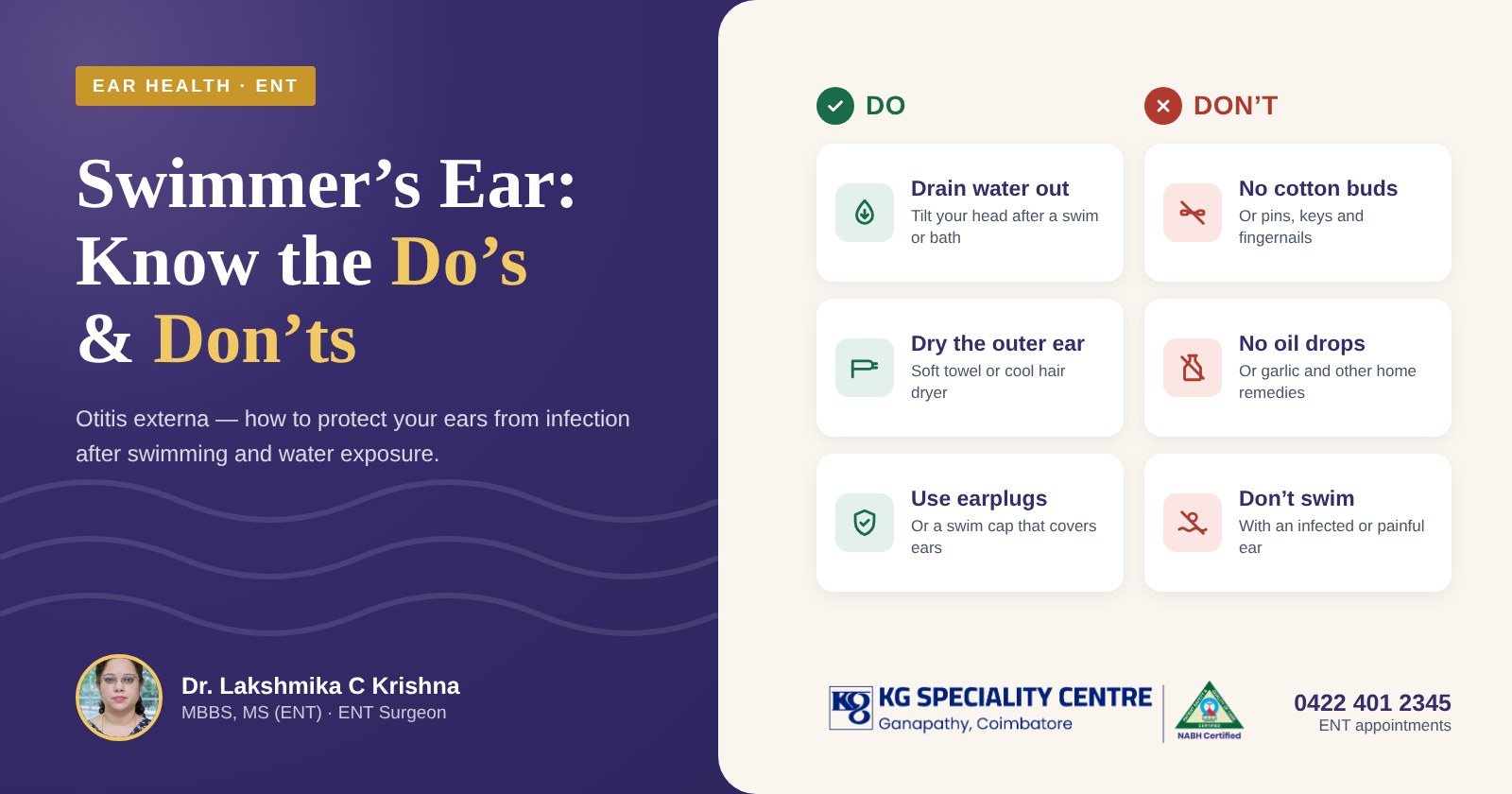

Swimmer’s ear (otitis externa) is an infection of the outer ear canal, usually caused by water staying trapped in the ear. It causes itching, ear pain that gets worse when you touch or pull the ear, discharge and a blocked feeling. Do tilt your head to drain water, dry only the outer ear, and wear earplugs or a swim cap. Don’t use cotton buds, hairpins or home-made oil drops, and don’t swim with an infected ear. Most cases settle within a week with prescription ear drops from an ENT doctor.
What is swimmer’s ear?
Swimmer’s ear, medically called acute otitis externa, is inflammation and infection of the external ear canal, the short tube that runs from the ear opening to the eardrum. It is different from the common childhood middle ear infection (otitis media), which happens behind the eardrum.
The skin of the ear canal is thin and protected by a light coat of ear wax, which is slightly acidic and water-repellent. When water sits in the canal for a long time, it washes away this protective layer and softens the skin. Bacteria, most commonly Pseudomonas aeruginosa and Staphylococcus aureus, can then enter and cause infection. In warm, humid weather like ours in Coimbatore, fungal infection of the ear canal (otomycosis) can also occur.
Good to know: despite the name, you do not have to be a swimmer to get it. Daily head baths, sweating, earphones and cleaning the ears with cotton buds are some of the most common triggers we see in our ENT clinic.
What causes swimmer’s ear and who is at risk?
- Water trapped in the ear after swimming, bathing or a head bath, especially in pools, lakes and rivers.
- Cleaning or scratching the ear with cotton buds, hairpins, keys, matchsticks or fingernails, which removes protective wax and scratches the skin.
- Earphones, earbuds and hearing aids worn for long hours, which trap heat and moisture.
- Skin conditions such as eczema, psoriasis or seborrhoeic dermatitis affecting the ear canal.
- Narrow ear canals or excess wax that holds water in.
- Hair products and chemicals such as shampoo, hair dye or sprays getting into the ear.
- Diabetes or low immunity, which raise the risk of a more severe infection.
Symptoms of swimmer’s ear
Symptoms usually start within a few days of water exposure and often affect one ear:
- Itching inside the ear canal (often the first sign)
- Ear pain that gets worse when you pull the earlobe, press the small flap in front of the ear (tragus) or chew
- Redness and swelling of the ear canal
- Discharge, which may be clear, yellow or foul-smelling
- Blocked feeling or muffled hearing
- In more severe cases: fever, swelling of the outer ear or tender glands in the neck
Swimmer’s ear or middle ear infection? A middle ear infection usually follows a cold, causes deep ear pain and fever, and touching the outer ear does not make the pain worse. In swimmer’s ear, even gentle pressure on the outer ear hurts. Only an ear examination can confirm which one you have, and the treatment is different.
Do’s: how to protect your ears
If you swim often or get repeated ear infections, ask your ENT doctor whether preventive ear drops after swimming are suitable for you. These should not be used if you have a hole in the eardrum, ear tubes (grommets) or have had ear surgery.
Don’ts: common mistakes that make ears worse
Avoid these:
- Don’t use cotton buds, hairpins, keys or any object inside the ear. They push wax deeper and scratch the skin, opening the door to infection.
- Don’t pour oil, garlic oil, onion juice or other home remedies into a painful or discharging ear. They can trap moisture, worsen infection and harm the ear if the eardrum is damaged.
- Don’t use leftover or over-the-counter ear drops without an examination. The wrong drop can be harmful if the eardrum has a hole, and antibiotic drops used unnecessarily can lead to fungal infection.
- Don’t swim or let water into an infected ear until your doctor says it has healed.
- Don’t scratch an itchy ear with fingers or objects, which breaks the skin and spreads infection.
- Don’t ignore ear pain if you have diabetes. Ear canal infections can become serious in people with diabetes and need prompt medical review.
- Don’t try ear candling. It does not remove wax and can cause burns and blockage.
“The ear cleans itself. Most of the outer ear infections we treat start with a cotton bud or water that was not drained out. Keep it dry, keep objects out, and come in early if it hurts.”
— Dr. Lakshmika C Krishna, ENT Surgeon, KG Speciality Centre, GanapathyHow is swimmer’s ear treated?
Swimmer’s ear responds well to treatment when started early. International guidelines from the American Academy of Otolaryngology–Head and Neck Surgery recommend ear drops, not oral antibiotics, as the first treatment for uncomplicated cases. At the ENT department of KG Speciality Centre, Ganapathy, treatment usually involves:
- Ear examination with an otoscope or endoscope to confirm the diagnosis, check the eardrum and rule out fungal infection or a middle ear problem.
- Ear canal cleaning (aural toilet) to gently remove discharge and debris so the drops can reach the infected skin.
- Prescription ear drops, usually an antibiotic or antibiotic–steroid combination, typically for about 7 days. Antifungal drops are used if a fungal infection is found.
- An ear wick (a small sponge) if the canal is too swollen for drops to enter.
- Pain relief, as swimmer’s ear can be very painful in the first couple of days.
- Oral antibiotics only when needed, for example if infection has spread beyond the ear canal or in people with diabetes or low immunity.
Most people feel better within 2 to 3 days of starting drops, and the infection usually clears within a week. Complete the full course even when the pain settles, keep the ear dry, and return for review if you are not improving within 48 to 72 hours.
Tip for using ear drops: lie with the affected ear facing up, put in the prescribed number of drops, gently press the tragus a few times to help them go in, and stay lying down for 3 to 5 minutes.
When should you see an ENT doctor?
Book an ENT consultation if you have:
- Ear pain, itching or blocked feeling that does not settle within a day or two
- Discharge from the ear, or reduced hearing
- Fever, or swelling and redness spreading to the outer ear, face or neck
- Ear infections that keep coming back after swimming or bathing
- Diabetes, low immunity or ongoing chemotherapy along with ear pain
- No improvement within 2 to 3 days of starting ear drops
Severe ear pain with high fever, facial weakness or swelling behind the ear needs urgent attention. KG Speciality Centre’s 24/7 emergency care on Sathy Road is available round the clock.
Key takeaways
- Swimmer’s ear is an outer ear canal infection, usually caused by trapped water.
- Pain on touching or pulling the ear, itching and discharge are typical signs.
- Drain water out, dry only the outer ear, and use earplugs or a swim cap.
- Never put cotton buds, pins or home-made oils into your ears.
- Prescription ear drops after an ENT examination clear most cases within a week.
- People with diabetes should get ear pain checked promptly.
Frequently asked questions
What is swimmer’s ear?
Swimmer’s ear (acute otitis externa) is an infection and inflammation of the outer ear canal. It usually happens when water stays trapped in the canal, softens the skin and allows bacteria or sometimes fungus to grow.
How do I know if I have swimmer’s ear or a middle ear infection?
In swimmer’s ear, pain gets worse when you pull the earlobe or press the flap in front of the ear, and the canal may itch, swell or discharge. A middle ear infection usually follows a cold, causes deep pain and fever, and touching the outer ear does not make it worse. An ENT doctor can confirm by examining the ear.
How is swimmer’s ear treated?
With prescription antibiotic or antibiotic–steroid ear drops, gentle cleaning of the ear canal by an ENT doctor, and pain relief. Oral antibiotics are needed only if infection spreads beyond the ear canal or in people with diabetes or low immunity. Symptoms usually improve within 2 to 3 days.
Can I use cotton buds to dry my ears after swimming?
No. Cotton buds push wax deeper and scratch the ear canal skin, making infection more likely. Tilt your head to drain water, dry the outer ear with a towel, and if needed use a hair dryer on the lowest, cool setting held about 30 cm away.
Can I swim while I have swimmer’s ear?
Avoid swimming and keep the ear dry until the infection has settled and your doctor confirms it, usually about 7 to 10 days. While bathing, place a cotton ball coated with petroleum jelly at the ear opening to keep water out.
When should I see an ENT doctor for ear pain after swimming?
If pain, itching or discharge does not settle within a day or two, hearing is reduced, there is fever or swelling around the ear, infections keep returning, or straight away if you have diabetes or low immunity.
Watch Dr. Lakshmika’s short video on swimmer’s ear on our Instagram page, or meet our ENT specialists in Ganapathy →
About the author
Dr. Lakshmika is an ENT surgeon who diagnoses and treats conditions of the ear, nose and throat in adults and children, including outer and middle ear infections, ear wax impaction and foreign bodies in the ear. Her surgical experience includes tympanoplasty, mastoidectomy and endoscopic sinus surgery.
- MS in Otolaryngology (ENT), Madras Medical College, Chennai (2020–2023)
- MBBS, Kanyakumari Government Medical College, Nagercoil (2012–2018)
- Advanced course in allergy diagnosis & immunotherapy, Kempegowda Institute of Medical Sciences, Bangalore (2026)
- Former Senior Resident in ENT, SRM Medical College, Chennai (2024–2026)
- Academic work submitted to the Indian Journal of Otolaryngology and Head & Neck Surgery
- Consults in English, Tamil and Malayalam
References
- Rosenfeld RM, et al. Clinical Practice Guideline: Acute Otitis Externa. Otolaryngology–Head and Neck Surgery. 2014;150(1 Suppl):S1–S24. doi.org
- Centers for Disease Control and Prevention. Swimmer’s Ear (Otitis Externa). cdc.gov
- National Institute for Health and Care Excellence (NICE). Clinical Knowledge Summaries: Otitis externa. cks.nice.org.uk
- American Academy of Otolaryngology–Head and Neck Surgery. Swimmer’s Ear. ENT Health. enthealth.org
How this article was written
- Written and reviewed by a specialist: written by an ENT surgeon who treats ear infections in our clinic, and medically reviewed on the date shown above.
- Evidence-based: treatment advice follows the American Academy of Otolaryngology–Head and Neck Surgery clinical practice guideline, NICE Clinical Knowledge Summaries and CDC guidance listed in the references.
- Independent: this article is not sponsored and does not promote any brand of ear drops, earplugs or other products.
- Kept up to date: our medical articles are reviewed at least once a year, or sooner if guidelines change.
- Found an error? Write to us via WhatsApp or call 0422 401 2345 and our medical team will review it.
Published by KG Speciality Centre, Ganapathy, a NABH-certified multispeciality hospital and part of the KG Hospital network, serving Coimbatore since 1974.
Medical disclaimer: This article is for general health education and does not replace a consultation with a qualified ENT doctor. Do not start, stop or change any ear drops or medicines without medical advice. If you have ear pain, discharge or hearing loss, please consult a doctor. In an emergency, call 0422 401 2345 or visit the nearest emergency department.